
311.9K
Downloads
447
Episodes
New for 2023: Victorian Poetry Scroll back for previous courses on Shakespeare, Eighteenth Century Poetry, Close Reading, Various film genres, Film and Philosophy, the Western Canon, Early Romantics, 17th Century Poetry, etc.
Episodes
Mar 11, 2012
Mar 11, 2012
50 min
[close reading] The question of what the poem's about becomes mapped into the question of whether the poem subsumes the mountain or the mountain the poem. If the poem is about the mountain, it, the poem, is still master. But if the poem can't manage to capture and communicate the mountain, then it isn't: it's about its own defeat as the mountain pierces the infinite sky. Comparison, again, to DIckinson's "sky" in "The Brain is wider than the Sky." Quick mention of the difference, in that poem of syllable and sound. God would be just a sound, the natural world, but the difference the brain might make in turning sound into syllable is the difference that imputing meaning makes. If the mind imputes meaning, then the home of meaning is in the mind.
Mar 9, 2012
Mar 9, 2012
1hr 17 min
[Renaissance Poetry] Nashe's litany, brightness falls from the air. Excursus on the poetic purity of the out-of-context: Browning; Kenneth Koch's "Songs from the Plays." Daniel's La Corona anticipations, and his graceful bow to Sidney and Spenser in "Musophilus" [3/6/12]
Mar 9, 2012
Mar 9, 2012
50 min
[closer reading] Mont Blanc in earnest: the two possible meanings or subjects of the first stanza (adverting mind, commanding mountain): the struggle between the mountain and the mind to determine which will be the metaphor for which. (3/7/12)
Mar 7, 2012
Mar 7, 2012
1hr 18 min
[renaissance poetry] More on Astrophel and Stella, especially the fourth song; also some attention to Shakespearean sonnets.
Mar 7, 2012
Mar 7, 2012
49 min
[close reading class] How Wordsworth used Milton (with reminders about Harold Bloom): comparisons with Book 3 of Paradise Lost; "Methought I saw my late espoused saint" and "Surprised by Joy"; the first lines of Shelley's Mont Blanc.
Mar 4, 2012
Mar 4, 2012
49 min
[Close reading 3/1/12] Against all odds, we finish the Intimations Ode. On to Mont Blanc!
Mar 2, 2012
Mar 2, 2012
48 min
[Close reading, 2/29/12] We continue onwards with the Intimations Ode, and the consideration of the child as the best philosopher but also at strife with its own blessedness. Whence the joy that Wordsworth declares?
Mar 2, 2012
Mar 2, 2012
1hr 19 min
[Renaissance poetery 2/29/12] Sidney's sophistication. The sestina form. More of the events of Astrophel and Stella. To be concluded next week.
Mar 1, 2012
Mar 1, 2012
1hr 20 min
The plot of Astrophel and Stella: what is its back story, and what can we infer?
Feb 28, 2012
Feb 28, 2012
47 min
[Close reading class] A general discussion of how Southey, Wordsworth, and Coleridge each became a Tory at / last, and on freedom of the soul in general. Return to the Intimations Ode at the end of class.
Feb 28, 2012
Feb 28, 2012
1hr 22 min
[Note: a minute or two at the beginning and end are just crowd walla: couldn't get GarageBand to cut those snippets off.] A talk at UCLA during the February vacation. Mainly on Milton and the relation of justice and the justice of the fact that we can judge what is just to narrative and vindication in Paradise Lost and Samson Agonistes, with some more general remarks on Kant and others.
Feb 17, 2012
Feb 17, 2012
50 min
[Close reading] After the dead end of his attempt to recover the Visionary Gleam, Wordsworth gives up the Intimations Ode for a couple of years. Then he reboots, imagining a different source for the clouds of glory that he saw in youth, since "Our birth is but a sleep and a forgetting." We begin considering this new, Platonic perspective.
Feb 16, 2012
Feb 16, 2012
1hr 18 min
[Note: I am podcasting two classes this semester. The shorter podcasts are from the close reading course; the longer ones, e.g. this one, are from the Renaissaince lyric course] We look at what makes Southwell's "Burning Babe" work, and what doesn't: students defend the poem; and we look at some particularly gorgeous passages from Marlowe's "Hero and Leander." Last class before vacation.
Feb 16, 2012
Feb 16, 2012
51 min
[Note: I am podcasting two classes this semester. The shorter podcasts are from the close reading course, e.g. this one; the longer are from the Renaissaince lyric course] We begin going through the Intimations Ode, after pausing (natch) to consider its motto from "My heart leaps up." Some consideration of the crisis lyric, following on from Frost's Birches.
Feb 11, 2012
Feb 11, 2012
47 min
Finally, a reading of Frost's Birches. Metaphor: tenor and vehicle. Relation to the Intimations Ode. The poem as a version of climbing birches and returning. The idea of the crisis lyric, of a poem as a way to think things through.
Feb 10, 2012
Feb 10, 2012
1hr 10 min
Some passages from The Faerie Queene, particularly Mutablitie and the Bower of Bliss. Question of relation of classical mythology to Christianity. Typology and the fourfold principle of interpretation discussed.
Feb 10, 2012
Feb 10, 2012
48 min
Bloom's ideas of poetic vocation. The Intimations Ode as everyone's vocation. Demonstration of the sense of poetic vocation through a consideration of Yeats's Circus Animal's Desertion. Wittgenstein on feelings.
Feb 8, 2012
Feb 8, 2012
1hr 16 min
Most people hadn't done the reading, so this is a desultory (root meaning: jumping around) class on Spenser, the aim being to give them some sense of what he's doing. We look briefly at the Epithalamion, at the Amoretti, and at the last two stanzas of the Mutabilitie Cantos.
Feb 8, 2012
Feb 8, 2012
50 min
Poetry's fictional addressee is the personification of Love. When Love leaves, Love is abandoned. A character only in literary space: a character who can only be fictional, which is what makes the personification so sad. That's what's going on in Bishop, Shelley's "When the Lamp is Shattered" and Yeats's "When you are old." NB: I think that I come close to being able to say what I mean here.
Feb 4, 2012
Feb 4, 2012
48 min
Love as the burning boy in Bishop's "Casabianca": metaphor and personification. Metaphor vs. simile. Pound's haiku like poem. The background in Southwell's high conceit in his "The Burning babe." Freud and the dream of the burning child. Love personified when all that's left of the desired other is the personified desire for the other: like her as another to who somehow is adequate to our passionate gried; like ourselves for the same reason, and neither of us, but rather the thing lost and returning to lament its loss. Yeats's "When you are old": her face, Love's face.
Feb 2, 2012
Feb 2, 2012
1hr 18 min
Two of Henry Howard, Earl of Surrey's poems. Violation of Petrarchan convention in "The Soote Season." How its rhymes work. "Ye Happy Dames" and the poetry of absence.
Feb 2, 2012
Feb 2, 2012
49 min
Who organizes the voices organizing voices in the Songs of Innocence and of Experience? How does Bishop make us of Hemans's "Casabianca"? Digression on enjambment. Bishop's "Casabianca" as a love poem. Student reading of three wonderful "Songs of Experience" responses to Hemans.
Jan 31, 2012
Jan 31, 2012
1hr 18 min
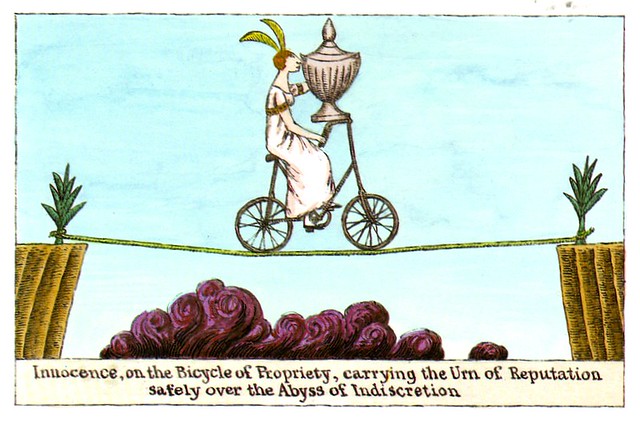
Petrarch performed, and Wyatt and Surrey's translations. The nature of translation for Wyatt: the estrangement that he himself allegorizes and embraces under the name of Love. Digression on allegory, via Edward Gorey:
Jan 31, 2012
Jan 31, 2012
47 min
A quick retrospect of the play of voices in the Nurse's songs, then most of the class on the two versions of the Chimney Sweeper, with attention to the difference between Blake as presenter of these poems and their first person singer.
Jan 29, 2012
Jan 29, 2012
54 min
How the Nurse's Song differs in the Songs of Experience. Polyphanic voices. Who the real speakers are, in both versions.